
CM Punjab Maryam Nawaz Projects for Punjab Province: Key Initiatives Shaping Public Services and Development

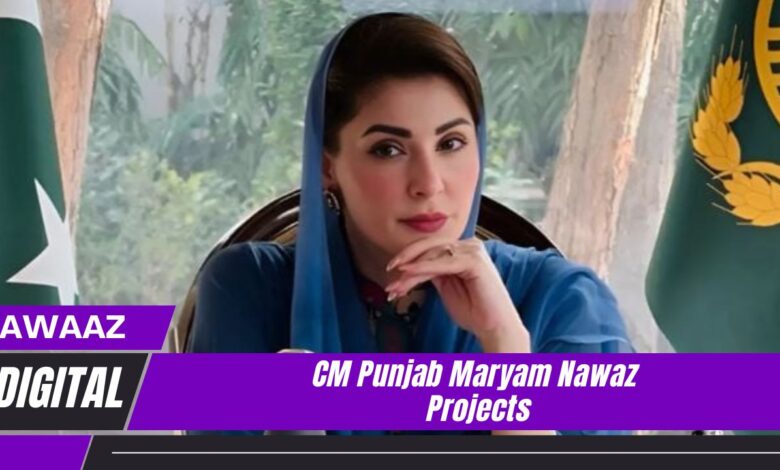
Punjab, as Pakistan’s most populous province, often sets the tone for governance, infrastructure, and public welfare across the country. Since taking office as Chief Minister Punjab, Maryam Nawaz has been associated with a range of projects and policy drives aimed at improving public services, urban management, healthcare, education, transport, and social welfare. Supporters describe these efforts as a push toward visible governance and citizen-focused delivery, while critics argue that long-term execution and sustainability will be the real test.
This article looks at some of the major projects and development priorities linked with CM Punjab Maryam Nawaz and what they could mean for the future of the province.
A Governance Style Focused on Visibility and Service Delivery
One of the most notable features of the current Punjab administration has been its emphasis on visible public service delivery. The government has tried to present itself as action-oriented, with frequent inspections, announcements, and direct engagement on issues such as sanitation, pricing, hospital conditions, school improvement, and urban cleanliness.
This approach appears designed to send a clear message that provincial governance should not remain limited to files and meetings, but should be seen in day-to-day public life. In practical terms, that has meant more attention on roads, municipal services, price control, enforcement, and field monitoring.
Infrastructure and Urban Improvement Projects
Infrastructure remains one of the most politically important sectors in Punjab, and the province has continued to prioritize road improvement, city uplift, and rehabilitation works. Urban centers such as Lahore, Rawalpindi, Faisalabad, and Multan usually receive attention first because of their population density, visibility, and economic importance.
Projects associated with the Punjab government have included road repairs, beautification campaigns, drainage improvement, cleanliness drives, and efforts to improve traffic flow. The larger idea behind these schemes is that visible infrastructure can improve both public satisfaction and economic activity. Better roads, cleaner markets, and improved municipal conditions can help commuters, businesses, and local commerce.
However, the long-term success of such projects depends not only on inauguration and media visibility, but also on maintenance, procurement quality, and transparent execution.
Health Sector Initiatives in Punjab
Healthcare has remained a major area of focus in Punjab. The provincial government has repeatedly highlighted hospital reforms, medicine availability, improved emergency care, and better management of public sector health facilities.
The broader goal appears to be improving access to treatment for ordinary citizens who rely heavily on government hospitals. In a province as large as Punjab, even small improvements in hospital administration, staff presence, and medicine supply can have a significant effect on millions of people.
Another important area has been maternal and child health, along with public messaging around preventive care and service delivery. If these initiatives are implemented consistently across districts, they could strengthen trust in the provincial health system. Still, healthcare reform is one of the hardest areas to fix, because results depend on staffing, budget discipline, monitoring, and local administration.
Education and School Improvement Efforts
Education is another sector that often defines the success or failure of provincial governments. Punjab has long faced challenges in public schools related to infrastructure gaps, teacher quality, classroom overcrowding, and unequal access between urban and rural areas.
Projects and reform messaging under CM Punjab Maryam Nawaz have pointed toward improving government school conditions, student facilities, and overall education standards. The purpose of such reforms is not only to improve literacy but also to strengthen human capital across the province.
If pursued seriously, investment in public education can produce long-term benefits that go far beyond politics. Better schools mean stronger workforce readiness, better social mobility, and improved outcomes for low-income families. However, education reform usually takes time, and real success depends on results in classrooms rather than announcements alone.
Social Welfare and Relief-Oriented Programs
A major feature of Punjab politics is public expectation around relief. Any government in the province is judged not only by development projects but also by how well it responds to household hardship, inflation, and the needs of vulnerable groups.
Programs linked with the Punjab government have included relief-oriented measures, targeted support initiatives, and schemes aimed at helping deserving families, women, youth, and low-income households. These kinds of interventions matter in a high-cost environment where many citizens struggle with food prices, utility bills, school expenses, and healthcare costs.
Such programs can provide meaningful short-term support, especially if they are well targeted and delivered transparently. At the same time, they work best when combined with broader job creation, inflation control, and improvements in basic public services.
Women-Centered Development Narrative
Because Maryam Nawaz is the first woman to serve as Chief Minister of Punjab, there has naturally been significant attention on women-focused governance themes. This includes greater visibility for women’s welfare, inclusion, access to services, and representation in public policy.
This political symbolism matters in a province where women’s participation in education, employment, mobility, and leadership still faces structural barriers. A governance model that gives higher importance to women’s issues can influence public debate and policy priorities in a meaningful way.
The real measure, however, will be whether this visibility translates into stronger institutional outcomes for women across healthcare, education, safety, transport, livelihoods, and social protection.
Agriculture and Rural Punjab
Punjab’s economy is deeply tied to agriculture, so no provincial development agenda can ignore farmers and rural communities. Although urban projects usually get more media attention, rural Punjab remains central to the province’s stability and growth.
Any serious Punjab development model must address irrigation, input costs, crop productivity, farm-to-market access, and rural infrastructure. Initiatives in agriculture and rural support are especially important because they affect food supply, farmer incomes, and provincial economic resilience.
If the Punjab government is able to combine urban development with meaningful rural reform, that would strengthen its overall performance more than city beautification alone.
Youth, Employment, and Skills Development
Punjab also faces growing pressure to create opportunities for young people. A large youth population can be a major strength, but only if supported by education, training, and jobs. Otherwise, it can become a source of frustration and underemployment.
Projects around skill-building, digital training, entrepreneurship support, and youth empowerment are therefore important for the province’s future. Development today is not only about roads and buildings; it is also about preparing people for the modern economy.
If the government expands practical training and market-linked skills, especially in technology, services, and vocational sectors, it could help create more durable economic value across Punjab.
Challenges Facing These Projects
While many projects and initiatives may sound promising, the main issue is execution. Punjab has seen many governments launch ambitious programs, but not all of them produced lasting results. Common challenges include delays, uneven implementation across districts, political overbranding, weak maintenance, and limited follow-through after the initial launch phase.
There is also the issue of balance. A government must ensure that highly visible urban projects do not overshadow less visible but equally important areas such as rural healthcare, school learning quality, water management, and institutional reform.
In other words, the true success of CM Punjab Maryam Nawaz projects will not be judged by announcements alone, but by whether people across the province actually feel improvement in daily life.
What These Projects Could Mean for Punjab
If implemented properly, these projects could strengthen public confidence, improve service delivery, and modernize parts of the province’s governance structure. Better roads, cleaner cities, stronger hospitals, improved schools, and more effective social support can collectively raise the quality of life for millions of people.
For businesses, improved infrastructure and urban management can support local economic activity. For families, better public services can reduce daily hardship. For the province as a whole, a functioning service-delivery model can create a stronger foundation for growth.
Yet the larger challenge remains consistency. Punjab does not only need projects that look impressive in headlines; it needs systems that continue working after the cameras leave.
Conclusion
CM Punjab Maryam Nawaz projects for Punjab province reflect an effort to combine visible governance with public service delivery, welfare messaging, and infrastructure improvement. From roads and hospitals to schools and social relief, the overall direction suggests a government trying to show speed, control, and responsiveness. Whether these efforts become a lasting development model for Punjab will depend on transparency, execution, and measurable results across both urban and rural areas.