Pakistan’s SME Crisis: Survival, Shutdowns, or Reinvention?
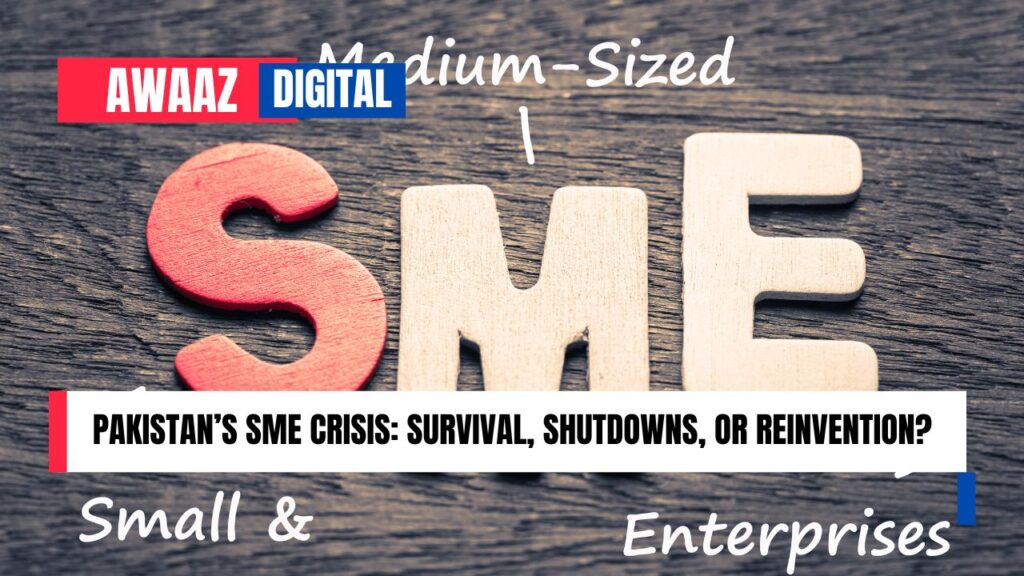
Small and Medium Enterprises (SMEs) are the backbone of Pakistan’s economy, contributing nearly 40% to GDP and employing a large portion of the workforce. However, over the past few years, SMEs have faced significant challenges — from inflationary pressures to limited access to financing.
Yet, the narrative is not purely negative. Alongside these challenges, a wave of resilience, policy focus, and digital transformation is shaping a new path forward. The question today is not just survival — but whether SMEs can reinvent themselves for a stronger future.
1. The Current Reality: Pressure on SMEs
SMEs across Pakistan are operating in a high-cost environment. Rising energy prices, currency depreciation, and demand fluctuations have directly impacted margins.
| Challenge | Impact on SMEs |
|---|---|
| Inflation | Increased cost of raw materials |
| High Interest Rates | Reduced access to working capital |
| Currency Depreciation | Higher import costs |
| Energy Costs | Operational strain on manufacturing units |
These pressures have forced many businesses to scale down operations, delay expansion plans, or temporarily shut down.
2. Government Support: Stabilization and Policy Direction
It is important to acknowledge that the current government has taken steps toward macroeconomic stabilization, which is a necessary foundation for SME recovery.
- Focus on fiscal discipline to control inflation
- Engagement with international institutions to stabilize reserves
- Policy discussions around SME financing and digitization
- Efforts to formalize the economy and improve documentation
While these measures may take time to fully translate into on-ground relief, they are essential for creating a more predictable and stable business environment. For SMEs, stability itself is a major advantage.
3. Survival Mode: How SMEs Are Adapting
Pakistani SMEs have historically shown strong adaptability. In the current environment, businesses are adopting practical survival strategies:
- Cost Optimization: Reducing overheads and renegotiating supplier contracts
- Inventory Control: Moving toward lean inventory models
- Cash Flow Focus: Prioritizing liquidity over aggressive growth
- Market Diversification: Exploring new customer segments
This shift indicates a move from growth-at-all-costs to sustainability-driven operations.
4. Shutdowns: A Temporary Setback, Not the End
While some SMEs have exited the market, it is important to interpret this correctly. Business cycles naturally eliminate weaker or inefficient models, making space for more resilient and innovative enterprises.
In many cases, entrepreneurs are not leaving the ecosystem — they are restructuring, pivoting, or preparing to re-enter with improved strategies.
5. Reinvention: The Emerging Opportunity
The most important trend is reinvention. SMEs that embrace change are positioning themselves for long-term success.
Key Areas of Reinvention
- Digital Transformation: Adoption of online sales, digital payments, and automation
- Data-Driven Decisions: Using transaction-level data instead of relying only on traditional financials
- Alternative Financing: Exploring fintech, invoice discounting, and BNPL models
- Operational Efficiency: Streamlining processes and reducing wastage
This shift aligns well with the government’s broader push toward a more documented and digitized economy.
6. The Road Ahead: Cautious Optimism
Pakistan’s SME sector is at a turning point. While short-term challenges remain, the combination of policy stabilization, entrepreneurial resilience, and technological adoption creates a strong foundation for recovery.
Rather than viewing the current phase as a crisis alone, it can be seen as a transition — from informal, inefficient structures to more robust, scalable business models.
The SMEs that survive this phase will likely emerge stronger, more disciplined, and better positioned for sustainable growth.
Conclusion
Pakistan’s SME crisis is not just about survival or shutdowns — it is fundamentally about reinvention. With the right mix of policy support, financial innovation, and business adaptability, SMEs can transform challenges into opportunities.